
Inter-Related Struggles 001 - From Palestine to "Xinjiang": Forced Labor and Capitalist rule | 從巴勒斯坦到”新疆“
Inter-Related Struggles 001 - From Palestine to "Xinjiang": Forced Labor and Capitalist rule | 從巴勒斯坦到”新疆“
Couldn't load pickup availability
All proceeds from the sale of this zine goes to Palestinian families.
Since October 7th of last year, many analyses have pointed out that Israel and China have borrowed "counter-terrorism" tactics and surveillance techniques from each other in the context of genocide and settler colonization, but there has been little discussion of the similarities between the two in terms of forced labor and the rule of capital. Indeed, the forced labor of Palestinians is little known in the Chinese-speaking world or internationally. For a long time, Israel and the West, led by Europe and the United States, have used hasbara and neoliberal discourses to hide their colonial plunder of Palestine, while today China and Russia are also whitewashing their own imperialist practices by aligning themselves with authoritarian governments and projecting an image of leading resistance to Western hegemony. In this way, choosing sides" has become the norm. Many liberals call for Uyghur human rights but support Israel's genocide, while "little pinks" (小粉紅 i.e. young cyber-nationalists) and "tankies" clamor for the liberation of Palestine but dismiss the labor camps in "Xinjiang" as a hoax concocted by US imperialism. While they seem to have very different political stances, both have fallen into the trap of the new Cold War narrative created together by the two capitalist blocs of liberal and illiberal "democracy." Thus, discerning the relationship between capital and forced labor/settler colonization is particularly important at the present time. With a little comparison, we can see that the structures of oppression for Palestinians and Uyghurs are extremely similar: state-initiated and capital-driven. This article will analyze the structural similarities and differences between forced labor and capital exploitation of Palestinians and Uyghurs from a left-wing perspective. The author hopes to dispel the myth of campism and call for inter-racial/-ethnic/-national proletarian solidarity against the oppression of colonization, capital and totalitarianism.
Author:
Editor:
Publisher: Self-published
Contributor(s):
Year: 2025
Pages: 28
Language: English and Chinese
ISBN:
Size: 100 x 280 mm
View full details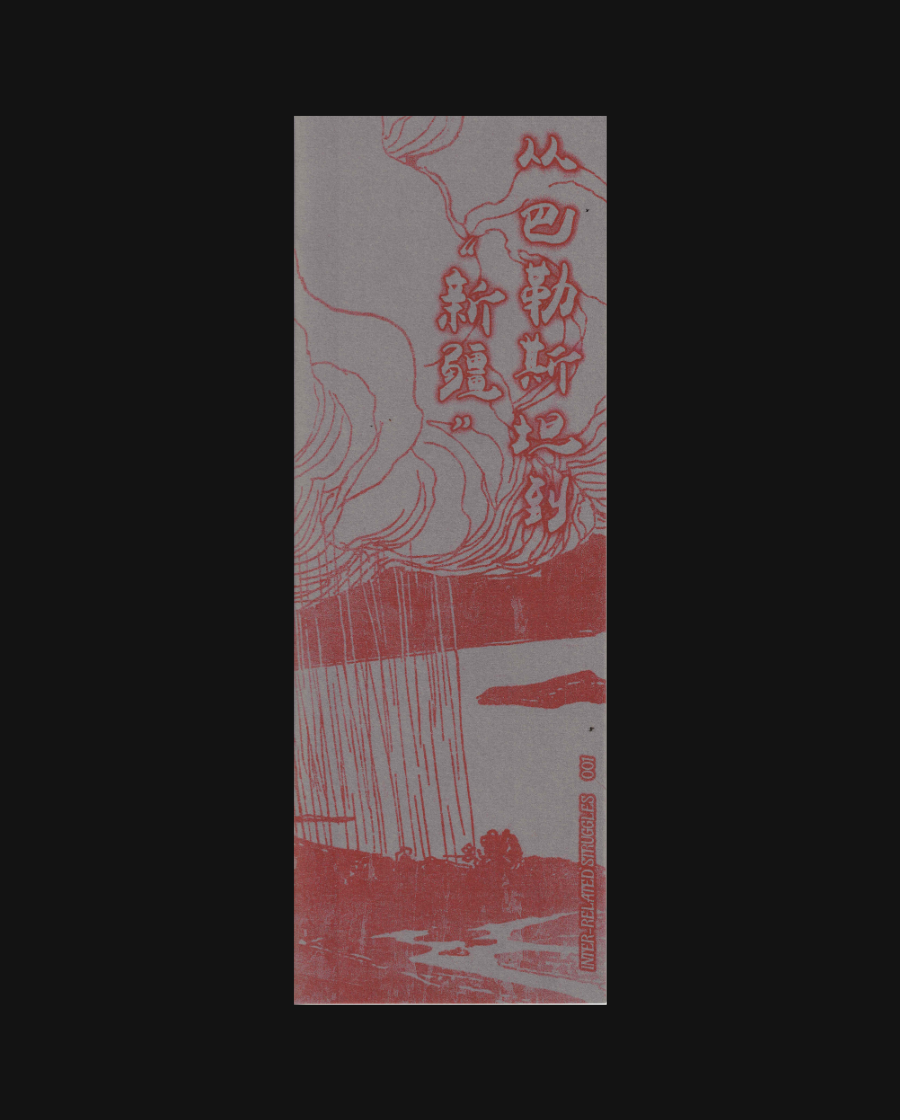
OTHER BOOKS
—